
If you've ever felt like you're throwing money at ads and hoping something sticks, you're not alone. Most small and medium business owners have heard the term "performance marketing" thrown around by agencies — but very few actually understand what it means, or why it's different from traditional marketing.
This guide breaks it down in plain language, so you know exactly what you're paying for and what results you should expect.
Performance Marketing, Simply Explained
Performance marketing is a form of digital marketing where you only pay for measurable actions — clicks, leads, sales, downloads, or sign-ups — instead of paying a flat fee for exposure or "brand awareness."
Think of it this way: traditional marketing is like buying a billboard. You pay a fixed amount, and you hope the right people see it. Performance marketing is like paying a salesperson only when they actually close a sale. Every rupee spent is tied to a specific, trackable result.
This is why performance marketing has become the default approach for businesses that want to know exactly where their money is going — and what it's bringing back.
How Is It Different from Traditional Marketing?
Traditional MarketingPerformance MarketingPay for space (TV, print, billboards)Pay for results (clicks, leads, sales)Hard to measure ROIROI is tracked in real timeOne-size-fits-all messagingTargeted to specific audiencesSlow to adjustCan be optimized daily or even hourlyFocused on reachFocused on conversions
The biggest shift is accountability. With performance marketing, every campaign produces data — and that data tells you what's working and what isn't, almost immediately.
The Core Channels of Performance Marketing
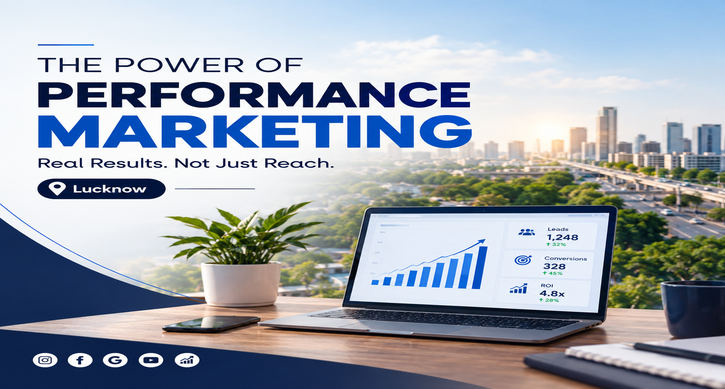
Performance marketing isn't one single tactic — it's a mix of channels working together. The most common ones include:
Paid Social Advertising Running targeted ads on platforms like Instagram, Facebook, and YouTube, where you pay based on clicks, impressions, or conversions.
Search Engine Marketing (SEM) Google Ads and similar platforms, where you bid on keywords and pay when someone clicks through to your site.
Content Marketing Blogs, videos, and social posts that build authority and organically drive traffic over time — often paired with paid promotion to accelerate results.
Influencer & Affiliate Marketing Partnering with creators or affiliates who are paid based on the actual sales or leads they generate for your brand.
Email & SMS Marketing Highly measurable, low-cost channels where open rates, click rates, and conversions are tracked precisely.
Why Business Owners Are Switching to Performance Marketing
1. You know exactly what's working. No more guessing whether that ad campaign helped. Dashboards and analytics show you cost-per-click, cost-per-lead, and return on ad spend in real time.
2. Your budget goes further. Because campaigns are optimized continuously, money gets shifted away from what isn't working and into what is — rather than being locked into a fixed spend regardless of results.
3. It scales with your business. Whether you're a local Lucknow business with a modest monthly budget or a growing brand ready to expand across India, performance marketing scales up or down based on what you can afford and what's delivering returns.
4. It's built for the platforms people actually use. Instagram Reels, YouTube Shorts, and Google Search are where your customers are already spending time. Performance marketing meets them there — with content designed to convert, not just to be seen.
Common Mistakes Business Owners Make
- Chasing vanity metrics. Followers and likes feel good, but they don't pay bills. Focus on metrics tied to actual business outcomes — leads, sales, sign-ups.
- Expecting overnight results. Performance marketing improves with data. The first few weeks are about testing and learning; the real gains come after optimization.
- Doing it without a strategy. Running ads without a clear goal, target audience, and creative plan is the fastest way to waste a budget.
- Ignoring the creative. Even the best-targeted ad won't convert if the video, graphic, or copy behind it doesn't grab attention in the first three seconds.
Getting Started: What You Actually Need
If you're a business owner considering performance marketing, here's the minimum you'll need before spending a single rupee on ads:
- A clear goal — more leads, more sales, more app downloads, or more foot traffic
- Defined target audience — age, location, interests, and behavior of your ideal customer
- Scroll-stopping creative — video, graphics, or copy built specifically for the platform you're advertising on
- A tracking setup — so every click and conversion can actually be measured
- A monthly review process — to see what's working and reallocate budget accordingly
The Bottom Line
Performance marketing isn't a buzzword — it's simply marketing that's accountable to results. Instead of hoping your marketing spend pays off, you get to see, in real numbers, exactly what it's doing for your business.
For business owners in Lucknow and beyond, this shift matters more than ever. Local competition is growing, attention spans are shrinking, and customers are making decisions faster than they used to. A performance-first approach ensures your marketing budget is always working as hard as you are.
Ready to see what performance marketing can do for your brand? Get in touch with Digiworks Plus for a free strategy call.


